Skip to content

Main

Home Pricing 🚨 Emergency Service

Services

Car Key Replacement Key Fob Programming Transponder & Smart Keys Car Key Duplication Ignition Repair / Replacement Mobile Lockout / Emergency

Vehicle Makes

Honda Toyota Ford Hyundai Kia Chevrolet BMW Mercedes-Benz Audi Volkswagen Nissan Mazda Subaru Lexus Mitsubishi Dodge / Chrysler / Jeep

Top GTA Cities

Toronto Mississauga Brampton Vaughan Markham Richmond Hill North York Scarborough All 25 cities →

Resources

Are car keys waterproof? Cost to replace a lost car key Find a reputable locksmith Change a key fob battery Modern car key security What are car keys made of? Which keys can be scanned? Keys that need a Faraday bag Car Keys Express at Costco Where to get a spare key programmed Who cuts car keys? Why wrap car keys in foil?

Company

About Contact 📞 (416) 900-3961 🚨 Emergency Service
📞
Start with the fob. Confirm the fit.

Key fob programming in Toronto & the GTA

Have a new fob, an extra remote, or a key that no longer responds? Tell GTA Car Keys what you have and what the vehicle does. A useful programming enquiry starts with compatibility and the current symptoms—not an assumption that every remote problem needs the same procedure.

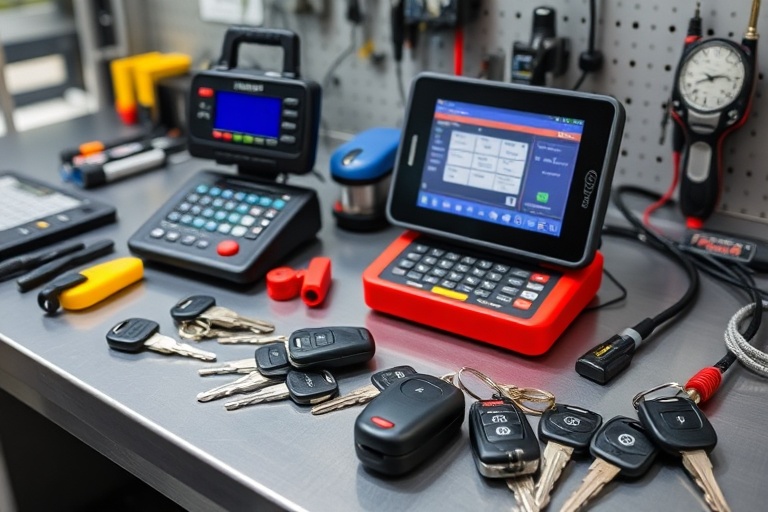
Car keys and programming equipment on a workbench
GTA CAR KEYS / FOB PROGRAMMING
Start with the details that matter.

Year & model · Working keys · Vehicle location

Programming is a service, not a diagnosis

Drivers often use “programming” to describe any problem with a remote or smart key. It is more useful to begin with what you can observe. Is this a new fob that has never worked with the vehicle, or an existing key that recently stopped responding? Does the vehicle still start? Do the remote buttons work? Those distinctions help frame the enquiry before a particular service is proposed.

A fob may be involved in several functions, depending on the vehicle's arrangement. Pressing a lock button, opening a door without pressing a button, and starting the vehicle are not interchangeable descriptions. Explain which action fails and which action still works. If a second key is available, mention whether it behaves differently. You do not need to identify the technical cause to give a useful account.

For a programming enquiry, provide the year, make, model, and starting method, plus whether you already own the fob. Ask about suitability before buying a part or arranging work. The shape of the remote and the seller's model list are not enough on their own to confirm that your item is appropriate. Vehicle-specific compatibility should be discussed directly.

Tell us which of these situations applies

You purchased a separate fob

Keep the listing, packaging, and any part reference available. Explain whether the item is new, used, or described as aftermarket by the seller. Do not assume that an unused-looking remote is ready to be paired with any compatible-looking vehicle. Ask what information is needed to assess the item before you arrange programming or buy another replacement.

You want an additional working key

Mention that the vehicle already has a key that works and that your goal is another usable key. Explain whether you need the same remote functions or have a different intended use. The enquiry should cover the complete outcome, including any relevant blade preparation, rather than focusing only on the word programming.

Your existing fob stopped responding

Describe when the change occurred and which functions are affected. Mention a recent drop, water exposure, case repair, or battery replacement if relevant. These details do not prove a cause, but they prevent the conversation from starting with an incomplete history. If the vehicle still starts normally, say so instead of describing the entire key as dead.

No key is currently working

Explain whether the keys are physically present or all missing. Those are different starting points. If a dashboard message appears, write down its wording rather than translating it into a diagnosis. State whether the vehicle is locked and where it is parked. This helps distinguish a programming question from a broader replacement or fault-assessment enquiry.

Separate remote buttons from starting behaviour

Make a short list of the actions you normally perform with the key. For a remote, that might include locking, unlocking, or opening a luggage compartment. For a vehicle with a start button, describe whether the vehicle detects the fob when you try to start it. Explain what happens during ordinary use without experimenting with unfamiliar programming sequences found online.

If one function works and another does not, include both facts. “The car starts but the unlock button does nothing” is more informative than “the key needs programming.” Likewise, an intermittent fault should be described as intermittent. Say whether the change occurs in more than one location and whether another key behaves normally, if that information is already available from everyday use.

The owner's manual is the appropriate place to check model-specific instructions about batteries and normal key operation. Avoid assuming that a procedure for a similar-looking vehicle applies to yours. A programming enquiry should establish the right vehicle and item first. Do not repeatedly attempt unfamiliar sequences in the hope that a general internet instruction will resolve an unexplained fault.

A practical route from enquiry to a usable fob

Identify the item

Provide your vehicle details and say where the fob came from. Include a part reference if you already have one, but do not dismantle the item just to search for a number. Explain whether the fob ever worked with your vehicle. That history helps distinguish a newly purchased item from a previously functioning key.

Confirm the proposed scope

Ask whether the item can be assessed for your configuration and what the quote would cover. Discuss whether a complete key is needed or only a particular part of the work. Ask what existing keys and vehicle access should be available. The answer should relate to your vehicle rather than a broad claim about a whole make.

Check the agreed functions

If work is arranged, review the functions that were included in the agreement. Ask about starting, relevant buttons, and any other key that should remain usable. Keep the description of the supplied item and work. If something does not behave as agreed, report the exact function and circumstances so the follow-up remains specific.

Buying a fob: appearance is not compatibility

An online photograph can show the casing and button arrangement, but it cannot establish every detail needed for a vehicle-specific match. A product title may group several model years or configurations together. Before purchasing, ask what reference information should be checked. Retain the seller's return conditions so you understand your options if the item is unsuitable for the intended work.

A used fob deserves a clear discussion about its history and suitability. Do not assume that every used item can be prepared for another vehicle or that every new aftermarket item offers the same functions as the original. These questions depend on the particular item and vehicle. The useful next step is to identify both, not to rely on the general promise that a remote is “programmable.”

If a separate fob has already been purchased, mention that before requesting a complete replacement quote. Compare the total proposed work and expected result. A lower part price does not necessarily mean a lower cost for a usable key. If the item cannot be confirmed as suitable, ask about the available alternatives before committing to another purchase.

Prepare the vehicle details without guessing the fault

An effective message might say: “I have a replacement fob for my vehicle, but it has never been used with it. I still have one key that starts the car. I would like to check the fob's suitability and the scope of programming.” Add the year, make, model, and city. This makes clear that the enquiry concerns an additional item rather than a key that suddenly stopped working.

For an existing remote problem, describe the actual behaviour: which buttons respond, whether the car starts, whether another key works, and when the change began. Include any recent handling or repair that might be relevant. Avoid stating that a battery, chip, or vehicle module is definitely faulty unless that has already been established by a qualified assessment you can describe.

When making arrangements, ask what needs to be present and what access is required. Keep all available keys together so you can accurately explain what you have. If the car cannot be moved, disclose that before a time is discussed. If the symptoms change before the appointment, update the same conversation; the new information may affect what should be checked.

Before the conversation ends, separate any confirmed information from details still awaiting assessment. For example, the vehicle model may be known while the suitability of a purchased fob remains open. Ask what would resolve that uncertainty and whether it affects the proposed price or timing. Keeping those points clear helps you decide what to do next without treating an initial enquiry as a guarantee that a particular item will work.
Key fob programming questions

Can any fob that looks the same be programmed?

No compatibility conclusion should be made from appearance alone. Provide the vehicle year, make, model, and any available item reference. Ask for suitability to be checked before purchasing or arranging work. A matching case or button count is not a guarantee of the required functions.

Does a remote that stopped working always need programming?

No. Describe the symptoms and history first. Explain what still works, what changed, and whether another key behaves normally. A remote problem can have different causes, so programming should not be assumed to be the solution simply because a button no longer produces a response.

Can I supply the fob myself?

Mention the item in your enquiry and ask whether it is suitable for the proposed work. Keep its source, description, and references available. The published programming-only category is a starting point for discussion, not confirmation that every customer-supplied fob can be used.

Should I bring all the keys I have?

Ask what is required for the particular work before making arrangements. Explain how many keys you have and which ones currently work. Keep them available so you can follow the instructions given for your vehicle, rather than assuming that only the new fob will be relevant.

What if the car starts but remote locking does not work?

Report exactly that distinction. Include whether the problem affects one key or every available key and whether it began after a known event. Do not describe the entire key as unusable when starting still works. That detail helps keep the enquiry focused on the actual symptom.

Keep exploring

Choose the guide that matches your question, or contact us with the vehicle details.

GTA Car Keys · Toronto & the GTA

Make the next conversation specific.

Have your year, make, model, working-key situation, and vehicle location ready. Ask about the suitable service, availability, and the full scope of your quote.